What Should You Look for When Buying Period Panties?
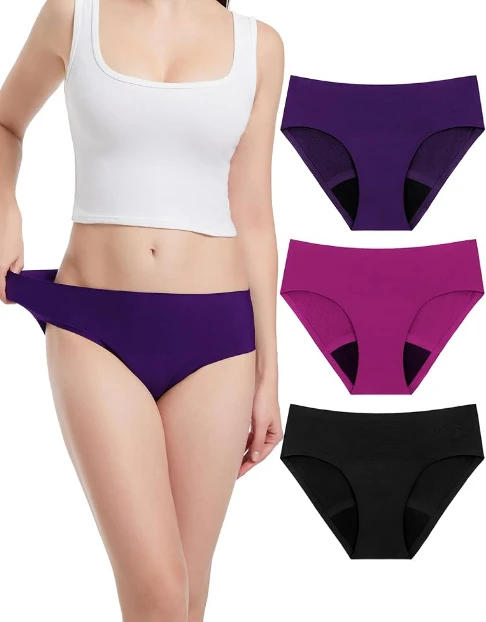
A useful pair of period panties should be judged by measurable features rather than the absorbency label alone. Check the gusset size, stated capacity, leak-resistant layers, fabric composition, fit, breathability, washing instructions, drying time, and independent material information. A 2024 laboratory study tested 21 menstrual products and found period underwear held an average of about 2 mL of red blood cells, while tested menstrual cups and discs held much more. ACOG notes that period underwear comes in lighter and heavier options and can be worn alone or with another menstrual product, depending on flow.
The first number worth checking is absorbency, but the label needs context. Menstrual bleeding is not constant across a cycle; ACOG notes that a typical period lasts 2–7 days, with the heaviest bleeding usually occurring during the first 3 days. A pair suitable for day 5 spotting may not provide enough coverage for day 2.
| Product detail | What to check | Why it matters |
|---|---|---|
| Absorbency | Light, moderate, heavy, overnight | Matches expected flow |
| Capacity | mL, if provided | Gives a measurable reference |
| Gusset | Width and front-to-back coverage | Helps contain fluid |
| Barrier | Leak-resistant backing or membrane | Limits moisture reaching clothing |
| Fit | Waist, leg opening, gusset position | Reduces shifting |
| Care | Wash temperature, drying method | Affects repeated use |
| Materials | Main fabric and inner layers | Helps assess comfort and transparency |
Manufacturers do not always use the same test method when describing capacity. A 2024 study published in BMJ Sexual & Reproductive Health tested 21 individual menstrual products using expired human packed red blood cells and found substantial variation between products. Period underwear in that laboratory sample averaged approximately 2 mL, while the tested categories of tampons, pads, and menstrual cups generally held much larger amounts.
A capacity number is useful only when you know how it was measured.
That finding makes the absorbent panel itself worth inspecting. Look at the gusset from both sides of the garment and check how far the protective area extends. For daytime use, a moderate front-to-back panel may be enough; for sleeping, broader rear coverage can be more useful because body position changes over several hours.
The location of the absorbent material also matters during movement. Walking, sitting, bending, and sleeping can move fluid toward different parts of the gusset. A narrow center panel may perform differently from a wider design even when both products use similar fabrics.
Fit connects these construction details to actual protection. A period product that shifts away from the body can allow fluid to reach the edge of the absorbent area. ACOG describes period underwear as washable underwear with special absorbent material and notes that different styles are designed for lighter or heavier periods.
When checking size, use the manufacturer's measurement chart instead of relying only on the size printed on your usual underwear. Compare waist and hip measurements, then look at leg opening and gusset width where those specifications are available.
The gusset should stay positioned where your menstrual flow actually reaches it, even when you change position.
Fabric choice deserves the same level of attention. Cotton, modal, nylon, polyester, and elastane blends are common, but the body fabric is only one part of the garment. The absorbent core, moisture-facing layer, and leak-resistant layer may all use different materials.
For someone wearing a pair for 6–10 hours, softness alone is not enough. A skin-facing layer that feels wet for a long period may be less comfortable than a fabric that moves moisture into the absorbent section. ACOG also advises avoiding fragranced or deodorizing products around the vulva and recommends breathable, non-tight underwear as part of general vulvovaginal care.
Material transparency also deserves attention because menstrual products are worn against the body for extended periods. In October 2025, the FDA issued draft guidance covering performance testing, labeling, and information disclosure for certain menstrual products, with an emphasis on more consistent testing and transparency. The guidance is still identified by the FDA as a draft rather than a final rule.
For shoppers comparing period panties, look for a product page that names its fabric composition instead of relying on phrases such as “clean,” “safe,” or “natural.” A more useful listing separates the body fabric from the absorbent and protective layers and explains any certifications or testing it uses.
PFAS claims also need precise wording. The FDA's current materials distinguish between different PFAS-related substances and note that safety questions depend on the specific material, use, exposure, and available data. A product statement that simply says “PFAS-free” tells you less than a statement identifying the tested component and the testing basis.
Washing instructions can affect everyday usability more than shoppers expect. Check whether the manufacturer recommends cold or warm water, whether fabric softener is discouraged, and whether the garment should be air-dried. A highly absorbent gusset may naturally take longer to dry than a thin everyday style.
A simple rotation also helps reveal whether the care routine fits your schedule. Suppose a person uses 4 pairs during a 5-day period and needs 8 total pairs to avoid frequent washing. The purchase should be evaluated against the actual laundry pattern rather than the price of a single garment.
Durability is another practical measure. Inspect stitching around the gusset, seams at the leg opening, and elastic recovery. After repeated washing, common areas to monitor include stretched waistbands, fabric pilling, odor retention, separation of laminated layers, and changes in absorbency.
Customer reviews are more useful when they mention a specific period of use. A review written after 2 wears mainly describes first impressions; one written after 6 or 12 months can provide more information about laundering and shape retention.
Period panties can also be used together with other menstrual products. ACOG specifically notes that period underwear may be combined with a tampon, pad, or menstrual cup for extra protection. This can be relevant during the first 1–3 days of a heavier period or when protection needs to last through work, commuting, exercise, or sleep.
| Use case | Features worth prioritizing |
|---|---|
| Light flow | Thin gusset, soft fabric, low bulk |
| Regular daytime | Moderate absorbency, stable fit, breathable construction |
| Heavy flow | Larger protective area, higher stated capacity |
| Overnight | Extended rear coverage, secure waistband, wider gusset |
| Exercise | Secure leg opening, stretch, moisture management |
| Travel | Faster drying, simple care instructions |
| Backup use | Lower bulk and comfortable fit |
The stated wear time should also be treated as product-specific. ACOG says period underwear can be worn for a full day, but the required change frequency depends on the underwear and the user's flow. Someone experiencing heavier bleeding may therefore need to change sooner even when a package describes the garment as suitable for all-day use.
There is also a clinical reason to pay attention to how menstrual products are described. The 2024 study on menstrual-product capacity noted that heavy menstrual bleeding can affect up to one-third of menstruating individuals and that clinicians often rely on patients' descriptions of product use when assessing blood loss. Keeping track of how often a product becomes saturated can therefore provide more useful information than relying on a vague label such as “extra absorbent.”
Price should be considered alongside expected use. A pair that costs $30 and remains comfortable after a year of regular washing is a different purchase from a $12 pair that loses shape within a few months. The actual comparison is based on usable cycles, replacement frequency, laundry requirements, and whether the product still fits properly after repeated wear.
Return policies matter too, especially for online purchases. Check whether unopened underwear can be returned, whether sizing exchanges are available, and whether the company has a satisfaction guarantee. Policies for intimate apparel often differ from those for ordinary clothing.
The product page should give enough information to answer several practical questions before purchase:
- What flow level is it designed for?
- Does the brand publish a capacity in mL?
- How far does the absorbent area extend?
- What fabrics are used in each layer?
- How should it be washed and dried?
- Can the garment be exchanged if the size is wrong?
- Is any testing or certification clearly identified?
A product that answers these questions in specific terms gives shoppers more usable information than one that relies mainly on lifestyle language. The same principle applies to absorbency claims, chemical disclosures, and durability statements: look for measurements, dates, test descriptions, or clearly defined standards rather than broad wording.
By comparing capacity, coverage, materials, fit, care requirements, and testing information together, shoppers can judge whether a pair fits a particular day of the menstrual cycle rather than treating every pair of period underwear as interchangeable.